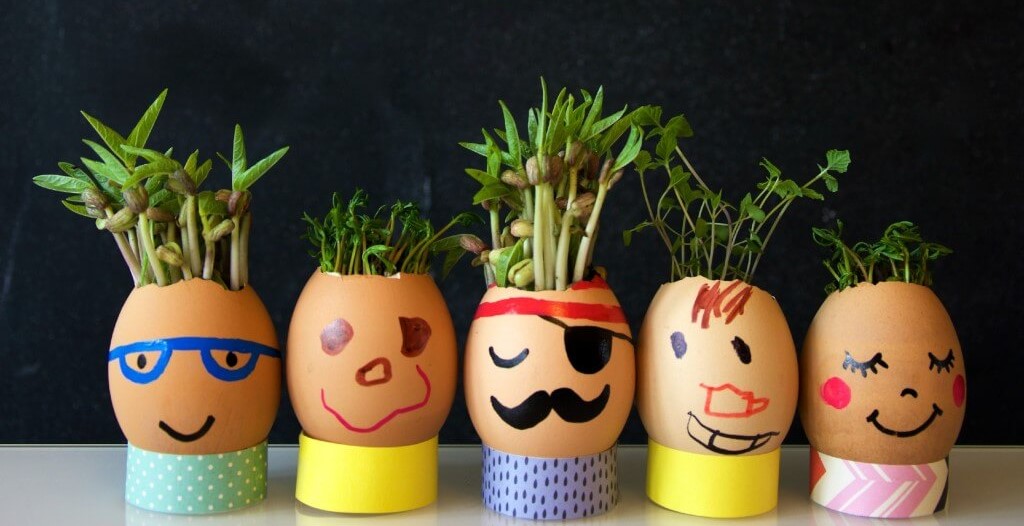
STEM
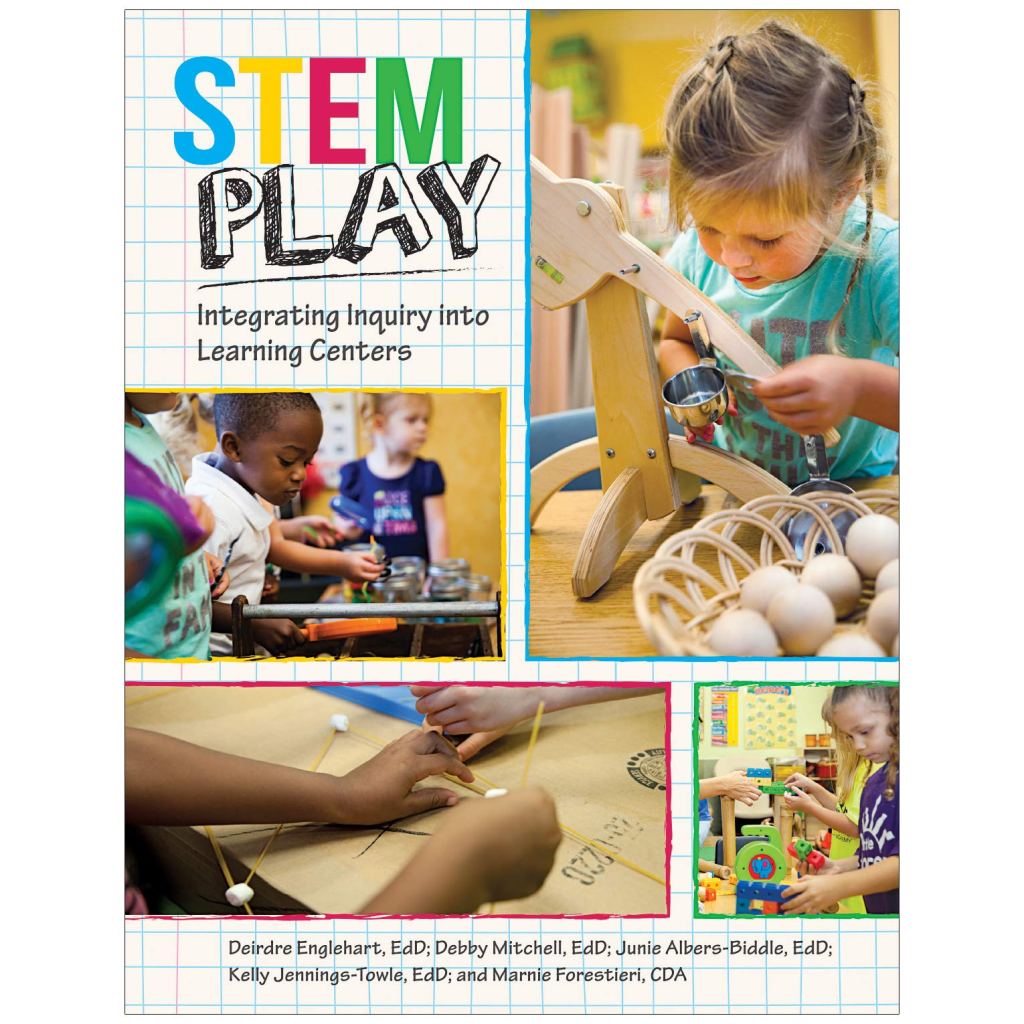
Science, technology, engineering and mathematics have become a major focus in many classrooms today. STEM play allows for development in many areas and can in many cases can be used to help develop cross curricular content. This means that while you may have a scienc, math or makerspcae in your classroom many activities can be intigrated into other centers to help meet STEM goals. A fantastic resource for this is the book STEM PLAY: Integrating Inquiry into Learning Centers by Deirdre Englehart ( for more information on this book visit our resource page).
Materials
It is important to remember that both time and materials must be taken into consideration when setting up these centers. Children will need time to do observation as processing may take a bit longer. Materials will likely change throughout the year to meet curricular needs but there are some staples that will always stay at your center. These may include:
- Work Benches
- Magnifying glasses
- Science and observation journals
- Markers/crayons
- Tweezers (plastic)
- Graduated cylinders (plastic)
- Signage
- Measuring tapes or rulers
- Scale
Year Long Plant Project
This project is able to be carried through multiple units and help with creating multiple literacies. And it is 100% DIYable for those crafty teachers out there. From community awareness, to environmental awareness and personal/social responsibility this project covers them all!
Starting this project at the beginning of the year and relating it to multiple topics this plant bench will become a staple of your classroom. By having students use their observation journals you are able to get marked assessments of literacy development through emergent writing and well as observational skills. Students can also stretch their reading skills with simple labels. Start this project with a group discussion about the plants using books for reference.
Note: This is not a project for the faint of heart. Power tools are involved.
For those of you living in the province of Alberta this project can be used and related to Environment and Community Awareness , Personal and Social Responsibility, and Physical Skills and Well-being. ( For more information on these curricular goals visit https://education.alberta.ca/media/160232/kindergarten-curricululm-overview.pdf)
This project lovingly created by Elizabeth Pompu and Rick Bassie
Materials:
- 24″X 48″ Plywood for bottom of planter
- 2 8″x 48″ Plywood for two long sides
- 2 8″ x 24″ Plywood for short sides
- 4 2″x 2″ x 16″ lumber for 4 legs
- 24″ x 44″ plywood for shelf
- 10 8″x 12″ plywood pieces for dividers
- Plastic garden linear
- Small rocks
- Potting soil
- Kid friendly plants
- Corner brackets to connect all pieces for maximum stability
- Optional water proof stain or waterproof paint and sealant
Instructions
- Cut wood to desired sizes and label so that pieces do not get misplaced in assembling
- If paints or staining do this step before assembly for ease.
- Pre-drill holes for bracket placement
- Assemble using corner brackets following this design leaving out the space dividers
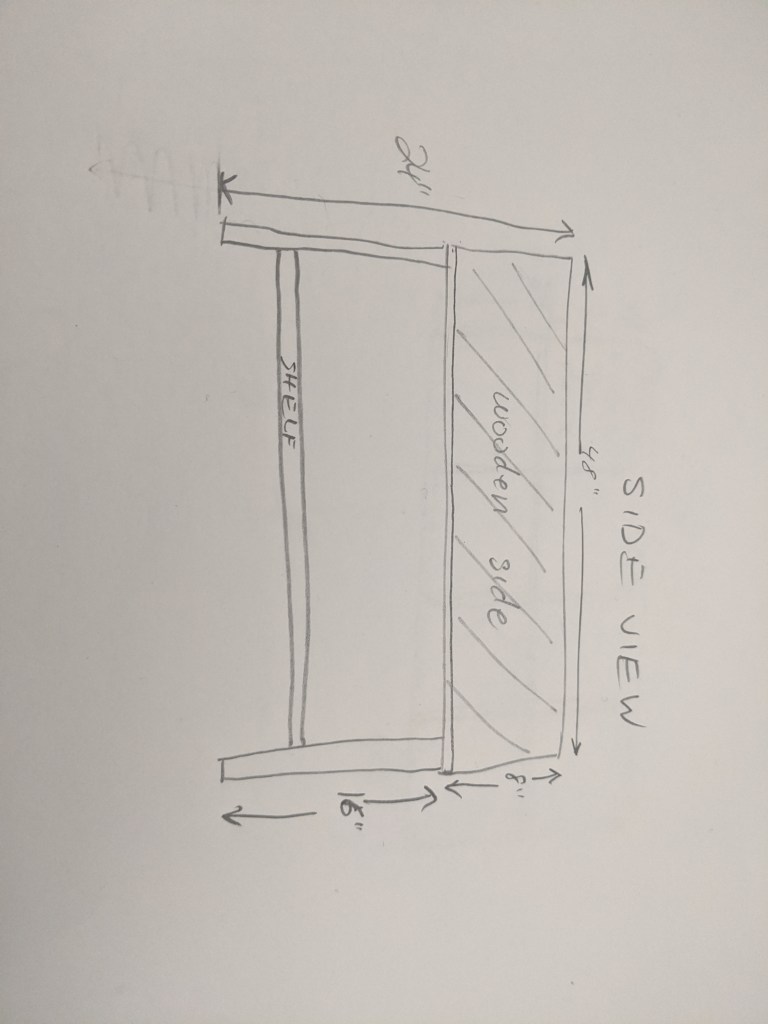
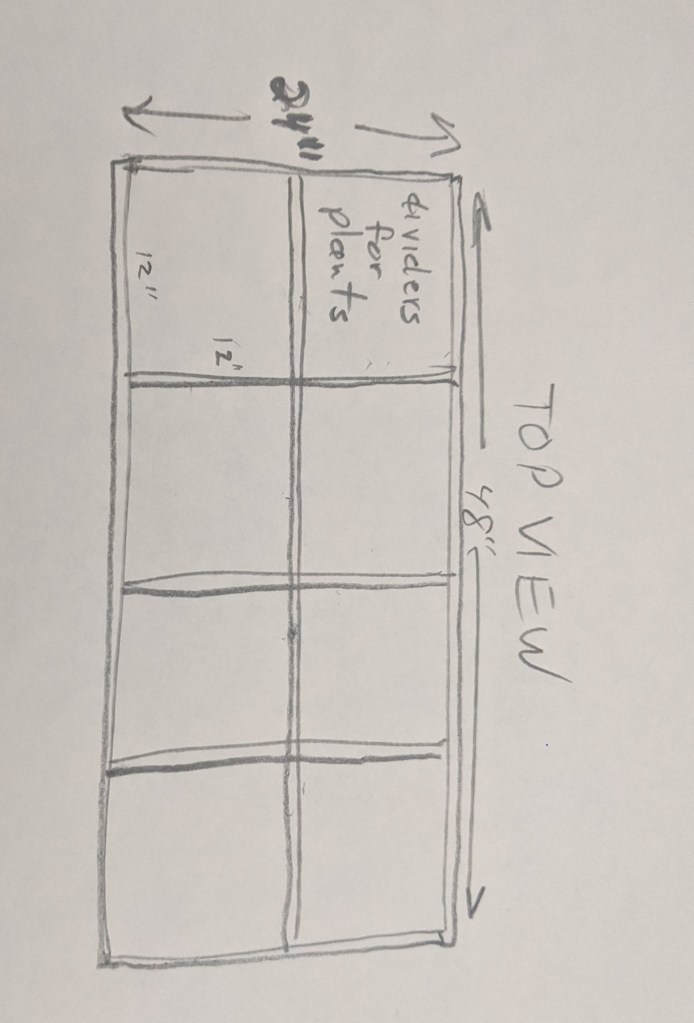
5. Line inside of box with plastic sheeting and staple into place with heavy duty staples.
6. Place and attach plant divider pieces
7. fill each section with one two two hanfuls of small rocks to cover bottom to help with drainage
8. Top with potting soil
9. Plant and enjoy!
Kid Friendly Plants
When it comes to plants in the classroom the question is what are the best? Well for the most part you want resilient plants that can handle over watering, under watering and being man handled. Plants that change or grow through cycles such as vegetables are also always a winner. remember to get the fullest out of your planters grow from seeds. These are some of the best plants for your room. we have included both the generic name and the scientific name for lesson planning purposes.
- snapdragon Antirrhinum majus
- Aztec marigold Tagetes erecta
- forget-me-not Anchusa capensis
- California poppy Eschscholzia californica
- pansy Viola x vittrochianna
- Radishes Raphanus Sativus
Observation Journals
Another great way to create a STEM crossover is by having students make there own observation journals for science!
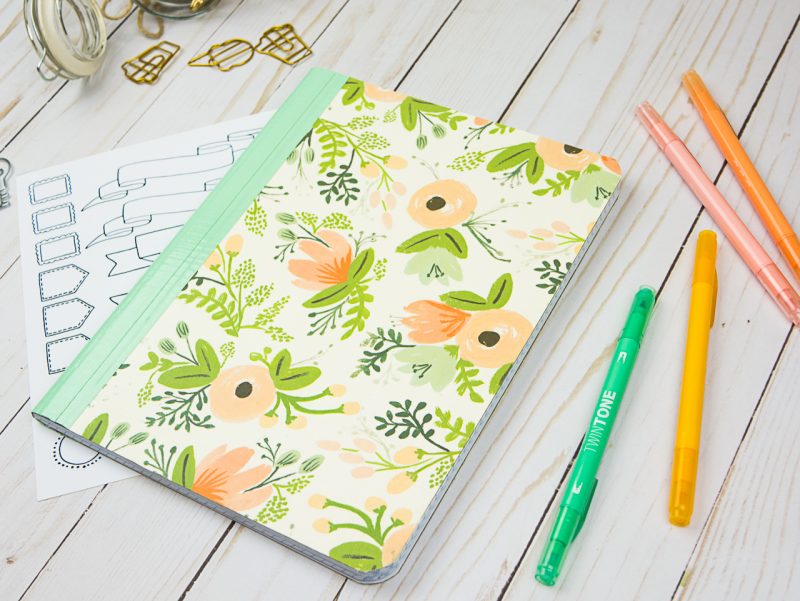
This Project lovingly crafted by Elizabeth Pompu
Materials
- Heavy duty card stock colored or white( 1 sheet per student)
- Printer paper ( multiple pages per student)
- Kid safe scissors
- Glue
- Markers
- stickers
- Stapler
Instructions
- Cut about 1 inch off the top and bottom of the card stock before giving to students.
- Fold card stock in half
- Take the sheets of paper and fold them in half
- put glue down the spin of blank sheets of each piece of paper sticking them all together
- Have student bring you their sheets of glued paper and card stock and add staples along the spin to hold everything together ( for safety you can add decorative wasi tape over the staples)
- Have students decorate the front of the journal and write their names
- Go explore!
References
Englehart EdD, Deirdre, Debby Mitchell EdD, Junie Albers-Biddle, EdD, Kelly Jennings-Towle EdD and Marnie Forestieri CDA. (2016) STEM PLAY:Integrating Inquiry into Learning Centers. Gryphon House. Lewisville, NC.
Alberta Education. (2011) Kindergarten Curriculum Overview. Edmonton. AB Retrieved from https://education.alberta.ca/media/160232/kindergarten-curricululm-overview.pdf
 Lost in Taught