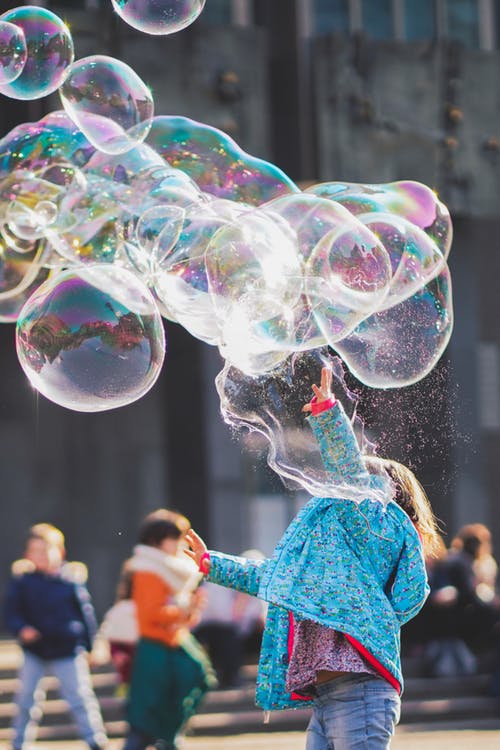
Sensory Play
There are many different forms of sensory play centers that can be used. All of them are working towards the same goal: helping students to explore and understand the physical world. These centers are vital and should always be set up in your classroom in one way or another. These centers allow for :
- Observation and questioning
- Improvements to visual- motor coordination
- Assists with development of science and mathematical literacy
- Co-operative play and interaction
Examples
Sand
Materials:
- Sand ( Normal grain or kinetic)
- Sand toys ( Scoops, pails, rakes)
- Buried treasures ( letters of the alphabet, toy jewels, treasure chest etc)
- toy animals,car/tucks
- sand wheel
- funnels and cylinders with gradations
- alphabet molds
- Sand table
Water
Materials:
- Water (changeable daily)
- Turkey baster, eye droppers, sieves, cups, spoons and buckets
- Boats
- Water wheel
- Graduated cylinders
- Sponges
- Non-porous objects
- Food coloring
- Floating objects such as letters and numbers
- Water table
Light
Materials:
- Bubbles
- Prisms
- Flashlights
- Mirrors
- papers of different thickness
- Magnifying glasses
- Water table
Make your own Kinetic Sand
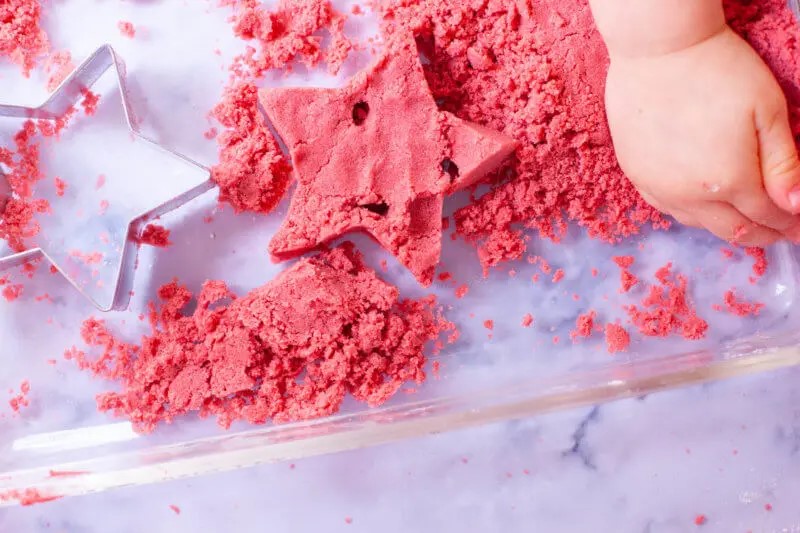
Many storebought kinetic sand products are extremly expensive. This easy recipe cost very little and can be a fun task for your class to start the year off.
Mathematics- Basic addition, counting and number relationship skills
Science- Basic experiment and observation skills
This sand will provide hours of sensory play at any sand station!
Materials
- 2.5 cups fine sand
- 1.5 cups cornstarch
- 0.5 cups baby oil/ mineral oil ( vegetable, olive oil or canola oil will go rancid and start to smell with time)
Note: This recipe makes one large bowl of sand but can be easily increased
Instructions
- Mix sand and cornstarch together till fully incorporated
- Add your selected oil and mix until completely incorporated
- Make sure there are no dry stops or oily spots. Add more sand and cornstarch mixture if to wet and more oil if to dry.
- Play!
Ideas
- Ask students to build sensory boards. Students can glue samples of different material to a piece of cardboard or secretly inside a cardboard box. Have students blindfold their partners to test their senses’! Ask students to practice descriptive terminology to compare textures. This can also work for sounds! Have students find materials to put inside boxes, or jars.
- Have students record the different sounds to test their friends, or play the class different sound recordings settings (ex. nature).
- Take away the students use of sight by putting objects into socks. Allow students feel the shape and size of the objects to guess what it inside.
- Have students sort materials by sight, touch, smell, and sound.
- Have students remove their shoes to try stepping on different materials such as bubble warp, carpet, stones, styrofoam packing balls or plastic. have students describe the sensations.
- Create a target snap rubber bands at it, throw paper balls, and whatever you can think of!
References
Manitoba Education and Advanced Learning. (2015). Learning through play. Retrieved from
https://www.edu.gov.mb.ca/k12/childhood/time_for_joy/chapter6.pdf
Eating Richely. (2020). Easy Homemade Kinetic Sand . Retrieved from https://eatingrichly.com/kinetic-sand-recipe/
 Lost in Taught